
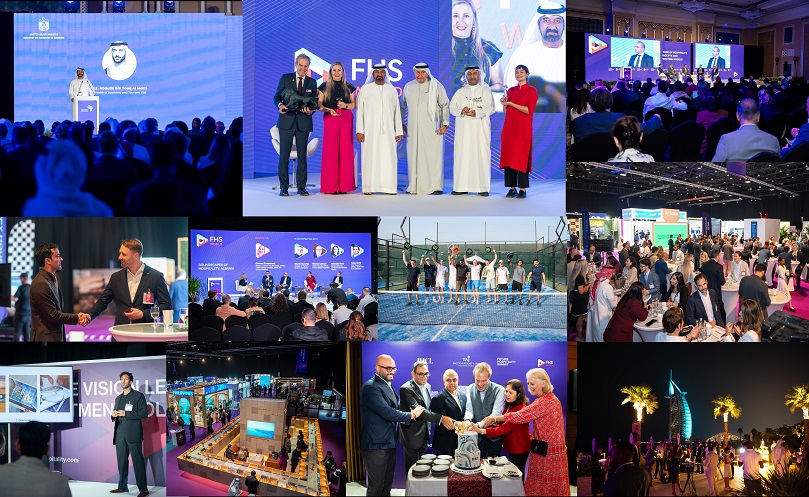
The era of scaling hospitality businesses simply by counting rooms is over, according to The Bench, organisers of Future Hospitality Summit, which says that the future of hospitality lies in creating integrated ecosystems, lifestyle platforms and purpose-driven destinations.
After nearly 1,600 hospitality leaders from more than 70 countries checked in to Dubai for FHS World 2025, it is clear that a new wave of factors is shaping the future of hospitality in the Middle East – and globally – from the rise of non-hospitality brands in real estate to the critical intersection of Artificial Intelligence.
FHS World 2025 welcomed more than 250 investors controlling US$5.5 trillion in assets, with US$975 million in business opportunities on the table and 12 major partnership agreements, MOUs, and hotel development contracts announced across the three-day event.
With preparations now well underway for FHS Saudi Arabia, taking place in Riyadh, 20-22 April 2026, here are five key takeaways from FHS World that are pivotal to the future growth and success of the region’s hospitality and tourism sectors.
Jonathan Worsley, Chairman & CEO, The Bench, said: “As we look toward the next few decades, the mandate is clear. The hospitality sector must build destinations that foster community, resilience, and genuine human connection. Room-based metrics have checked out, making way for building with purpose, connectivity, empathy and sustainability.”
Top five takeways from FHS World:
1. The rise of the lifestyle platform and branded residences
The definition of a hospitality asset has fundamentally changed, moving away from traditional room-based inventory towards integrated ecosystem models that blend living, working, and leisure. This is clear from the unprecedented explosion in the branded residences sector, which has grown by almost 200% in the last decade and is forecast to more than double between now and 2030.
Non-hotel entrants, including automotive and fashion brands such as Aston Martin and Pininfarina are entering the market at pace, driving culture and capital by offering investors a sense of identity rather than just a service. While the sector was traditionally dominated by established, world-famous names in hospitality, the rise of non-hospitality brands is set to shape the future of this ever-growing segment of the industry.
And the financial data supports the hype, with branded residences projects commanding price premiums of up to 47% in competitive markets like Dubai. However, to be successful, branded residences need trusted, top-tier hopsitality partnerships to manage services like housekeeping and concierge. Without this, the value of these residences can diminish, experts warn.
2. AI: automating the predictable, humanising the exceptional
Technology was a dominating theme at FHS World 2025, but the narrative has matured. The industry no longer debating if AI should be adopted, but how. Experts say it is vital to determine how automation can enhance the all-important human touch, not replace it.
AI has become and efficency engine: a critical tool for revenue management and operational efficiency. The right sytems can increase RevPAR by 9% and GOP margins by 4% within just 90 days, according to data.
Despite these advancements, leaders believe that emotional intelligence remains the unique selling point of the industry. Guests want efficency and convenience, but the human touch remains vital. The goal: use AI to handle routine tasks like reservations and payments, allowing staff to spend more time on empathy and guest connection. AI should be an invisible enabler without over-complicated interfaces that frustrate or confuse guests.
3. Sustainability: from rhetoric to risk management
Sustainability has evolved from a corporate social responsibility initiative to a hard financial metric, with conversations at FHS World 2025 heavily focused on climate risk as a financial reality.
With extreme weather on the increase, the insurance industry is withdrawing from high-risk markets, and hoteliers are now advised to treat sustainability as a risk mitigation strategy to secure asset viability and lower insurance premiums.
The spotlight is also on the importance of future investments meeting high sustainability standards, such as the BREEAM certification, in order to attract and retain the ever-growing number of eco-consious tourists who now consider a destination’s carbon footprint and envrionmental policies when choosing where to visit and stay. Adopting these green standards is also pivotal in securing green finance and satisfy institutional investors.
4. The Middle East as the global laboratory
While Western markets face challenges with high tariffs and debt costs, parts of the Middle East – especially the UAE and Saudi Arabia are enjoying high liquidity and robust transaction volumes.
With KSA’s unprecedented hospitality, tourism and real estate transformation, the country is driving massive investment through legislative reforms, such as the foreign ownership law that effect in January 2026 and the white land tax, which are unlocking land supplies for development. The focus is on creating diverse offerings that cater to both international tourists and local residents as part of Vision 2030.
Meanwhile, Dubai continues to attract substantial foreign direct investment, thanks to its transparency and established market conditions. It has successully transitioned from a seasonal destination to a year-round hub through diversified tourism products and infrastructure.
5. Wellness 2.0: The gym for the mind
The concept of wellness in hospitality is undergoing a radical shift, moving away from just having an onsite spa and fitness centre to increasingly focusing on holistic wellbeing and longevity.
Cognitive health is key, with increasing demand for “gyms for the mind” that address information overload and mental health, integrating ancient wisdom (like Ayurveda) with modern science to allow guests to regroup and recentre.
The industry is also waking up to sleep tourism, with high-performance living environments, such as those pioneered by Equinox Hotels, focusing on sleep systems and regeneration as core pillars of the guest experience.
Jonathan Worsley added: “The next 20 years of hospitality will not be defined by who builds the most, but by who builds with the most purpose. Whether it is creating 15-minute connected communities in Riyadh, empowering the workforce with meaningful career paths, or designing regenerative real estate that improves human health, it is clear that the future belongs to those who can create lasting, emotional connections.”
-ENDS-
 uaenews4u.com