
Abu Dhabi, UAE, 27 January 2026 — Abu Dhabi’s flagship AI Adopters event, Machines Can Think 2026, featured a keynote by Yann LeCun, Professor at New York University on Objective-Driven AI: World Models, Reasoning, and Efficiency which examined how AI systems can move beyond pattern recognition toward goal-oriented reasoning, improved efficiency, and more reliable decision-making in real-world environments. Machines Can Think 2026 is co-organised and co-hosted by Polynome and the Mohamed bin Zayed University of Artificial Intelligence.
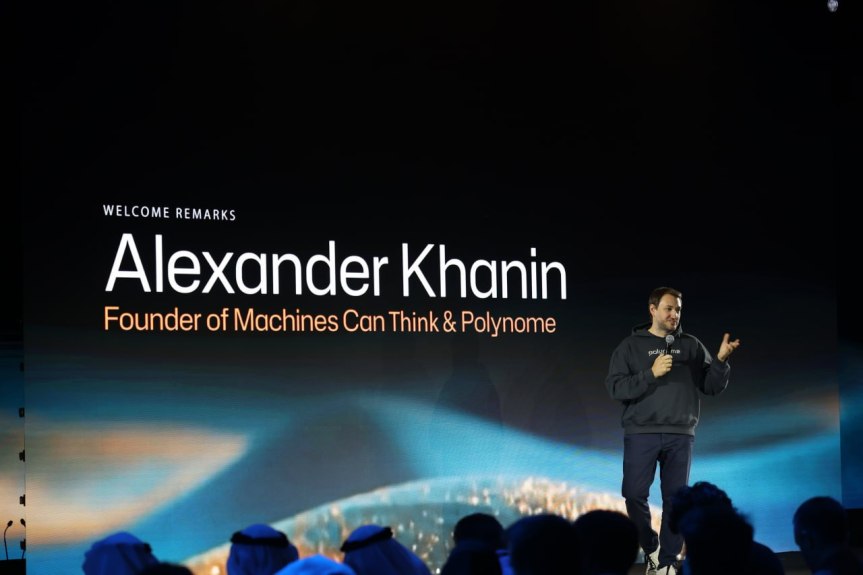
The flagship executive AI summit brings together global innovators, leading UAE institutions, government decision-makers, and world-class researchers shaping the future of intelligent technologies, with a strong focus on governance, infrastructure, and measurable impact. In his opening remarks, Alexander Khanin, Founder and Director of Polynome Group, positioned Machines Can Think as a strong platform for public and private sector leaders to address AI adoption at scale. He noted that the calibre of speakers and the depth of discussion were designed to move beyond vision-setting, enabling informed debate and actionable outcomes.
Alexander Khanin, Founder and Director of Polynome Group, said: “As the Machines Can Think 2026 continues, attendees will explore frontier science, scalable AI adoption, and practical applications aligned with the UAE’s 2031 AI Strategy and its ambition to build the world’s first AI-native government. The conversations reflect a maturing approach to AI, where impact, accountability, and long-term value now stand alongside innovation. We are grateful for the government’s support to bring together such a strong community of global leaders and experts.”
Machines Can Think 2026 featured 50+ topics and 1,500 experts from 30+ countries across its two-day agenda. Day one features a dense program across its Co-Evolution and Tech tracks, with sessions on AI Factories: Enabling AI at State Scale, examining national AI infrastructure and large-scale deployment. Keynotes explored advances in World Models, alongside technical perspectives on Three and a Half Generations of Video Generation Models, Gamification of Large Language Models, From Intelligence to Awareness: The Next Layer in Enterprise AI, A New Playbook for Drug Discovery and Development, and Foundation Models for Biology: From Structures to Systems explored advances in reasoning, generation, enterprise intelligence, and life sciences. Practical deployment was addressed through workshops such as From AI Ambition to Delivery: Practical Insights from the UAE Public Sector, Your AI, Your Control: Sovereign AI, From Strategy to Practice, Trace & Proof First: Build Proof-Backed Search Agents with Evals and Live Observability, What C-levels Must Know About AI and Architecting an AI-First Culture: The AI Academy’s 2026 Roadmap. Governance, investment, and societal impact were examined in Pilot to Policy: AI Safety, Why Unicorn Logic Breaks in AI, and The Future at the Crossroads of People, Business and the City. Sector-focused discussions examined drug discovery and development, foundation models for biology, personalised human phenotyping, and AI in education and the knowledge economy, setting a rigorous foundation for deeper exploration as the summit continues into day two.
Andrey Doronichev, CEO of Bioptic, said, “What makes Machines Can Think is that it connects people working across the full AI stack, from researchers training neural networks to teams applying AI in highly regulated industries like pharma. The region is reaching an inflexion point where compute and infrastructure are advancing, but the real opportunity lies in building research depth and attracting specialised scientific talent. Platforms shift the perception that serious AI research and long-term innovation can be built from here, not just deployed here.”
Machines Can Think sits within the wider Machines Can Summits series, which has become a global reference point for applied AI dialogue, bringing together 25,000 participants from the AI community. With previous editions generating over 6 million online engagements and attendees from 82+ countries, the event catalyses partnerships, research initiatives, and strategic MoUs. It continues to scale both in reach and influence as a forum where AI ambition is translated into action.
The summit is supported by a growing ecosystem of partners, including the Mohamed bin Zayed University of Artificial Intelligence, Abu Dhabi Convention and Exhibition Bureau, Yango Group, Mubadala, Abu Dhabi Police, DDN, e&, Tahaluf, aiphoria, Backwell Tech, Women in AI (global network and UAE chapter), Sandooq Al Watan, XPANCEO, MBuzz, Beco Capital, Hub71 Orbit, Jupiter E-Power, and VAST Data.
Machines Can Think 2026 will continue today with more sessions focused on scaling AI responsibly and embedding it into long-term national and enterprise strategies.
Machines Can Think 2026 is taking place on 26–27 January at Park Hyatt Saadiyat, Abu Dhabi.
To learn more, visit www.machinescanthink.ai.
-END-
About Polynome Group
Polynome Group is dedicated to accelerating AI innovation through events, educational programs, and investment opportunities. Its flagship series of events, the “Machines Can” summits, have become a premier platform where breakthroughs are revealed and future partnerships are forged — empowering businesses and governments to harness the transformative power of AI.
 uaenews4u.com