
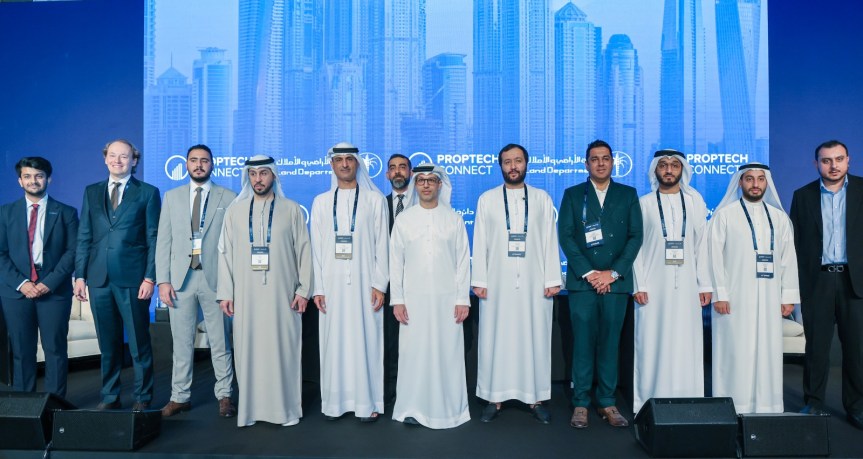
- Signing of strategic agreements and partnerships to support innovation and expand the ecosystem of ownership and institutional investment.
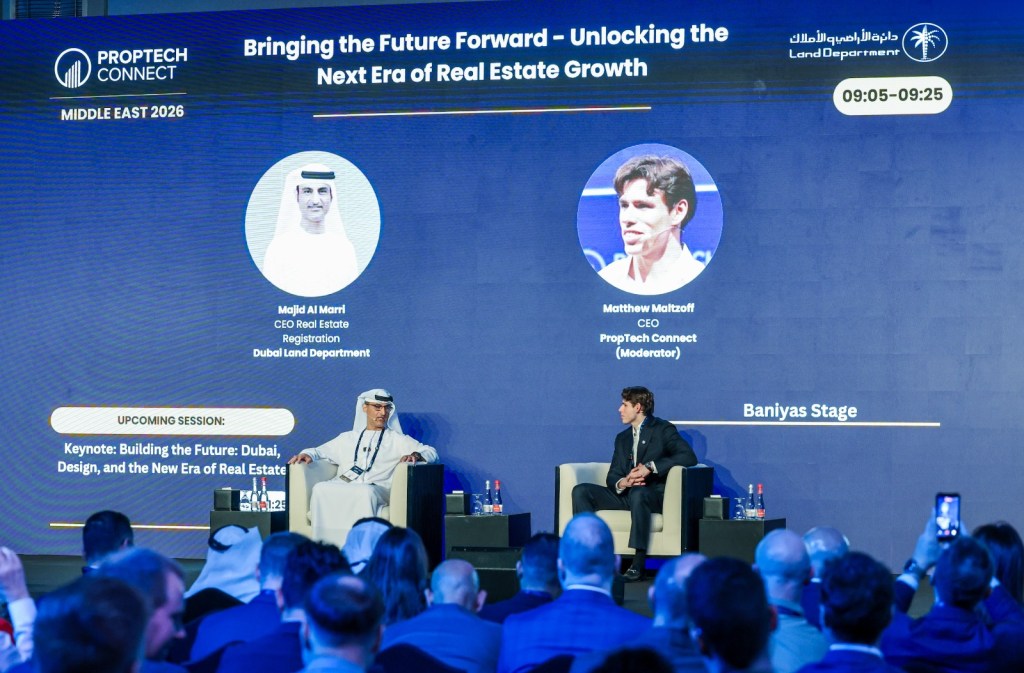
- Majed Al Marri: Dubai is transforming real estate innovation into sustainable economic value through digital transformation and artificial intelligence.
- Matthew Maltzoff calls for high-impact partnerships and broader collaboration to accelerate innovation across the world’s largest asset class.
- Specialised sessions discussing PropTech, asset management, customer experience, and capital flows.
Dubai, United Arab Emirates, 4 February 2026: The activities of PropTech Connect Middle East 2026 officially kicked off today, Wednesday, under the organisation and supervision of Dubai Land Department (DLD), marking a strategic step that reflects its efforts to implement the vision of the wise leadership and the strategic directions of Dubai and the UAE to reinforce the emirate’s position as a global hub for real estate technology, accelerate digital transformation in the real estate sector, and align with the objectives of the Dubai Economic Agenda D33 and the Dubai Real Estate Strategy 2033.
The launch of the event was marked by the presence of senior government leaders, decision-makers, leading developers, investors, and global PropTech companies, underscoring the pivotal role of Dubai Land Department as a regulatory authority driving the development of an integrated real estate ecosystem and enhancing the market’s readiness for future requirements.
The first day of the event opened with a keynote address delivered by Matthew Maltzoff, CEO of PropTech Connect, in which he affirmed that the platform brings together leaders, innovators, and investors who share a unified vision to elevate the built environment through the adoption of advanced technologies and the development of high-impact partnerships capable of strengthening investment portfolios and unlocking new growth opportunities.
He called on participants to engage actively and contribute meaningfully to the discussions and dialogues, helping accelerate knowledge exchange and translate ideas into actionable opportunities that collectively and sustainably advance the world’s largest asset class.
Transforming Innovation into Sustainable Economic Value
During the event’s main session, Majed Al Marri, CEO of the Real Estate Registration Sector at Dubai Land Department, affirmed that Dubai’s hosting of the first regional conference fully dedicated to real estate technology reflects the emirate’s forward-looking vision under the leadership of His Highness Sheikh Mohammed bin Rashid Al Maktoum, Vice President and Prime Minister of the UAE and Ruler of Dubai, to solidify Dubai’s position as a global hub for innovation in the real estate sector.
He noted that the event comes in implementation of the directives of His Highness Sheikh Hamdan bin Mohammed bin Rashid Al Maktoum, Crown Prince of Dubai, Deputy Prime Minister and Minister of Defence of the UAE, and Chairman of The Executive Council of Dubai, in line with the objectives of the Dubai Economic Agenda D33 and the Dubai Real Estate Strategy 2033, particularly through the launch of the Dubai PropTech Hub as a strategic initiative aimed at transforming innovation into tangible economic value, with a strong focus on digital transformation and artificial intelligence.
Al Marri highlighted the pivotal role of Dubai Land Department in aligning technological innovation with regulatory frameworks, ensuring that digital solutions evolve from operational tools into drivers of sustainable economic value. He emphasised that fostering a competitive investment environment requires a flexible legislative framework, data-driven governance, and advanced digital infrastructure that enhance transparency, accelerate transaction processing, and improve overall market efficiency, in line with the requirements for long-term growth.
Al Marri also drew attention to the record-breaking performance indicators of Dubai’s real estate market at the beginning of 2026, with total real estate transaction values reaching approximately AED 111 billion and more than 22,108 transactions registered, reflecting notable growth compared to the same period last year. He noted that these figures underscore the market’s resilience and the effectiveness of DLD’s digital ecosystem.
Strategic Agreements to Strengthen Partnerships and Innovation in the Real Estate Market
On the sidelines of the conference, Dubai Land Department, in collaboration with the Dubai Department of Economy and Tourism, signed eight memoranda of understanding with real estate development companies, as part of efforts to support the First-Time Home Buyer Programme, strengthen public-private partnerships, and accelerate the adoption of advanced digital solutions. These agreements aim to enhance market efficiency, reinforce transparency, and improve the overall experience of investors and customers.
The agreements were signed with Samana Developers, Arada Developments, IRTH Signature Developments, Reportage Prime Properties, Qube Development, Manam Realty, Sky View Developments, and 4Direction Development.
In addition, Dubai Land Department signed a separate memorandum of understanding with Equitativa Dubai to launch and advance a global promotion initiative for real estate investment funds. The agreement aims to reinforce Dubai’s position as a global hub for institutional real estate investment and support the development of a robust legislative, regulatory, and promotional environment that enables the growth and sustainability of real estate investment funds, in line with the UAE’s strategic directions.
Workshop to Enhance Governance and Procedural Efficiency
As part of the first day’s programme, the event featured a specialised workshop bringing together Mohammed Yehya, Director of Real Estate Transactions at DLD, and Maryam Karmostaji, Manager of Jointly Owned Property Regulatory at DLD, moderated by Karim Hilal, Founder and CEO of ProTenders. The workshop focused on the role of technology, governance, and data-driven regulation in shaping the future of Dubai’s real estate sector.
During his intervention, Mohammed Yehya outlined the current priorities of Dubai’s real estate market, which centre on sustaining investor confidence, enhancing operational efficiency, and delivering long-term asset value. He explained that developers are increasingly focused on creating high-quality, future-ready assets aligned with end-user requirements, sustainability standards, and smart technologies. At the same time, investors continue to prioritise transparency, regulatory clarity, and stable returns within a globally competitive environment.
With regard to next steps following the conference, Mohammed Yehya emphasised Dubai Land Department’s openness to direct engagement with international companies seeking to enter or expand within the emirate’s real estate market, through its official platforms, investor services, partner networks, and ongoing sector initiatives. He also recommended engagement with strategic partners across Dubai’s economic ecosystem, including the Dubai International Financial Centre (DIFC) and Dubai Silicon Oasis, to provide an integrated framework that supports innovation, investment, and sustainable growth.
Jointly Owned Property in Dubai’s Real Estate Market
For her part, Maryam Karmostaji delivered a comprehensive overview of the concept of jointly owned property within Dubai’s real estate market, explaining that it applies to developments in which unit owners jointly own and manage common areas and shared facilities alongside their individual property ownership, across residential and mixed-use projects. She affirmed that such developments are governed by a clear regulatory framework overseen by Dubai Land Department, which defines ownership rights, responsibilities, and governance structures, ensuring transparency, protecting owners’ interests, and supporting the sustainability and long-term value of shared assets.
She further noted that Dubai Land Department has established an integrated regulatory framework for the management of jointly owned property, with a strong focus on transparency and rights protection. This framework clearly defines the roles and responsibilities of owners, owners’ associations, and management companies, while strengthening accountability and governance. She added that regulatory oversight, service charge governance, and the adoption of digital systems play a critical role in safeguarding owners’ interests, enhancing asset value, and ensuring the long-term sustainability of jointly owned developments.
Specialised Sessions Shaping the Future of the Real Estate Sector
The conference programme featured a series of high-impact sessions focused on practical objectives that support the development of the real estate sector, addressing key themes shaping the industry’s ongoing transformation. In the session titled ‘Building the Future: Dubai, Design, and the New Era of Real Estate,’ featuring Masih Imtiaz, CEO of Imtiaz Developments, the discussion highlighted the fundamental shift of PropTech from a supporting function into a core driver reshaping how cities are designed, developed, and operated.
Within the data-driven transformation track, the session ‘Catalysts of Change: Tech, Data, and the New Frontiers for Real Estate’ explored how data is evolving from a traditional reporting tool into a competitive advantage that enables faster decision-making and accelerates execution. Meanwhile, the session ‘Enhancing Tenant Experience and Building Stronger Communities within Developments’ focused on the shift in user expectations and the role of hospitality-inspired concepts, digital services, and smart connectivity in creating more engaging communities, with a direct impact on occupancy rates, tenant loyalty, and the long-term value of assets.
Reshaping the Global Real Estate Investment Landscape
At the level of global investment, the session titled ‘The Dominance of Capital Flows: Middle East Investment Strategies on the Global Real Estate Stage’ examined the growing role of capital originating from the region in reshaping the global real estate investment landscape.
In the context of portfolio management, the session ‘Tech-Driven Asset Management’ explored how artificial intelligence and automation are increasingly being deployed as practical tools to enhance net operating income, increase occupancy rates, and improve the efficiency of maintenance and energy management.
The session ‘Constructing Tomorrow: Scaling Innovation and Tech for Mega Projects’ addressed the requirements for embedding innovation throughout the full lifecycle of large-scale developments, from planning through to long-term operations. The discussion underscored the importance of the right tools, partnerships, and leadership models to move innovation from limited pilot phases to rapid, large-scale implementation with greater efficiency.
The mega projects track concluded with the session ‘Building Smart at Scale: Embedding Technology and Sustainability in the Middle East’s Mega Projects,’ which emphasised the need to embed smart solutions and sustainability from the earliest planning stages to ensure operational readiness, performance, and safety at scale.
A Platform Driving Transformation and Connecting Regulation, Innovation, and Investment
The conference is welcoming more than 4,000 participants and over 1,500 companies specialising in real estate technology, reaffirming PropTech Connect Middle East 2026’s role as a leading platform, led by Dubai Land Department, to connect regulation, innovation, and investment within a robust institutional framework driven by a clear, forward-looking vision. This approach supports the competitiveness of Dubai’s real estate market and reinforces the sustainability of its growth at both regional and global levels.
– ENDS –
 uaenews4u.com